

How the Florida Do Not Resuscitate Order Differs from an Advance Directive
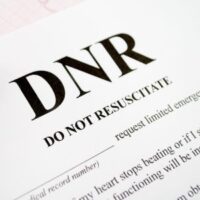
If you have started planning for your future medical care, you have probably come across two terms that get confused often: the Do Not Resuscitate order and the advance directive. Are they the same thing? Not quite, and the difference matters a great deal if you ever end up in a medical emergency. Understanding how each document works can help you decide what you actually need.
What Is a Do Not Resuscitate Order in Florida?
A do not resuscitate order, often called a DNRO, is a narrow document with one job. It tells emergency medical technicians and paramedics not to perform CPR if your heart or breathing stops. Florida Statute 401.45 governs how these orders work outside a hospital setting. For the order to be valid, it must be on the specific yellow form created by the Florida Department of Health, and it must be signed by both your physician and you (or your surrogate, proxy, or guardian, depending on your situation).
Here is something many people do not realize: a DNRO is only effective when EMS personnel can actually see it. If the form is not on hand, or if it is not printed on yellow paper, first responders are required to attempt resuscitation, even if your family insists that is not what you wanted.
How Is an Advance Directive Different?
An advance directive is a much broader category of planning document. Under Chapter 765 of the Florida Statutes, an advance directive can include:
- A living will, which addresses life-prolonging procedures if you develop a terminal condition, an end-stage condition, or a persistent vegetative state
- A designation of a health care surrogate to make medical decisions on your behalf if you cannot
- Instructions regarding anatomical donation
An advance directive can guide a wide range of decisions, including ventilators, feeding tubes, and other long-term treatment questions. But here is the catch: a living will does not instruct paramedics on what to do during a cardiac or respiratory emergency. It typically only takes effect after physicians confirm a qualifying condition, which takes time. A DNRO acts immediately, in the moment EMS arrives.
Why Does This Distinction Matter So Much?
Picture this scenario. Someone has a thorough living will stating they do not want aggressive interventions. Their heart stops at home. Paramedics arrive. Without a valid DNRO on yellow paper, they are obligated to begin CPR anyway, because a living will is not what governs their actions in the field. This is one of the more common and painful surprises families encounter, and it is entirely preventable with the right paperwork in place.
Put simply, your advance directive shapes your long-term medical care and who can speak for you. Your DNRO controls what happens in an emergency, on the spot, before anyone has time to consult a document buried in a drawer. Most people benefit from having both, because each one covers a different situation.
Talk to an Attorney About Putting the Right Documents in Place
Questions about which documents you need, or whether your current paperwork actually does what you think it does, are worth sorting out before an emergency happens, not after. Our Dade City estate planning attorneys help clients put together advance directives, s, and the rest of an estate plan that reflects their actual wishes. Speak with your primary care physician about having a DNRO prepared. Contact The Law Office of Laurie R. Chane today to discuss your situation.
Source:
flsenate.gov/Laws/Statutes/2011/401.45

